
















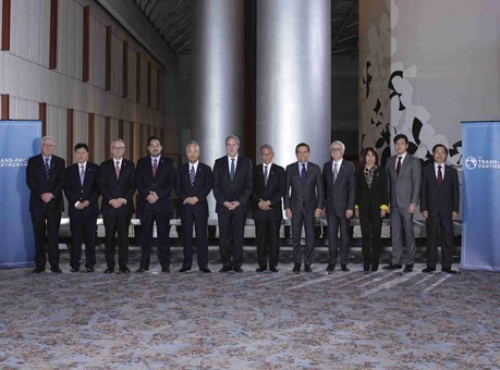


The United States and 11 other Pacific Rim nations on Monday, October 5, agreed to the largest regional trade accord in history, a potentially precedent-setting model for global commerce and worker standards that would tie together 40 percent of the world’s economy, from Canada and Chile to Japan and Australia, the New York Times reports.
The Trans-Pacific Partnership still faces months of debate in Congress and will inject a new flash point into both parties’ presidential contests.
But the accord — a product of nearly eight years of negotiations, including five days of round-the-clock sessions here — is a potentially legacy-making achievement for President Obama, and the capstone for his foreign policy “pivot” toward closer relations with fast-growing eastern Asia, after years of American preoccupation with the Middle East and North Africa. Trade ministers from Pacific nations met in Atlanta in a bid to get a final agreement on the largest regional trade accord in history.
The Pacific accord would phase out thousands of import tariffs as well as other barriers to international trade. It also would establish uniform rules on corporations’ intellectual property, open the Internet even in communist Vietnam and crack down on wildlife trafficking and environmental abuses.
The Office of the United States Trade Representative said the partnership eventually would end more than 18,000 tariffs that the participating countries have placed on United States exports, including autos, machinery, information technology and consumer goods, chemicals and agricultural products ranging from avocados in California to wheat, pork and beef from the Plains states.
Japan’s other barriers, like regulations and design criteria that effectively keep out American-made cars and light trucks, would come down.
The parties to the accord also include New Zealand, Mexico, Peru, Malaysia, Singapore and Brunei.