














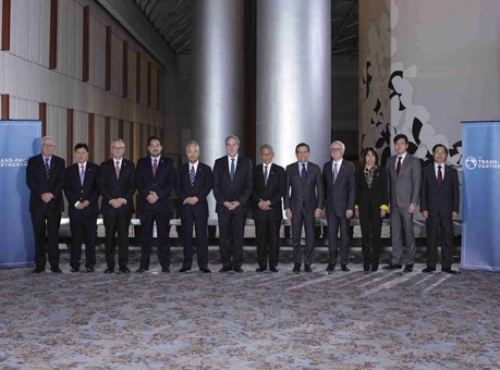


The U.S.-led Trans-Pacific Partnership, one of the biggest trade deals in history, was signed in New Zealand on Thursday, February 4 as protestors demonstrated over fears for jobs and sovereignty, AFP reports.
The ambitious deal, promising the elimination of nearly all tariffs among the 12 member nations, aims to break down trade and investment barriers between countries accounting for about 40% of the global economy.
U.S. President Barack Obama hailed the signing, saying the TPP would give the United States an advantage over other leading economies, namely China.
He called the TPP "a new type of trade deal that puts American workers first."
However, protesters argue it will cost jobs and impact on sovereignty in Asia-Pacific states.
"TPP will provide much better access for goods and services to more than 800 million people across the TPP countries, which make up 36 percent of global GDP," New Zealand Prime Minister John Key said, according to AFP.
The agreement was signed by Australia, Brunei, Canada, Chile, Japan, Malaysia, Mexico, New Zealand, Peru, Singapore, the United States and Vietnam.
"Other countries have already signaled an interest in joining TPP," Key said. "And this could lead to even greater regional economic integration."