










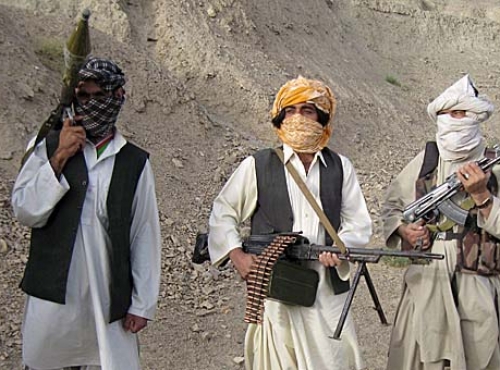


The Afghan Taliban's leadership council met on Sunday, May 22 to start considering succession after a U.S. drone strike in Pakistan targeted its commander, two Taliban sources told Reuters, in the strongest sign yet the insurgency had accepted he was dead, the news agency reports.
The strike targeting Mullah Akhtar Mansour on Saturday was perhaps the most high-profile U.S. incursion into Pakistan since the 2011 raid to kill al Qaeda leader Osama bin Laden and sparked a protest by Islamabad that its sovereignty had been violated.
If confirmed, Mansour's death could trigger a succession battle within a Taliban insurgency that has proven extremely resilient despite a decade and a half of U.S. military deployments to Afghanistan.
The Taliban have not yet officially confirmed that Mansour was killed and there were conflicting accounts on Sunday, with the Afghan government declaring him dead, while Washington stopped just short of doing so.
"At this point, we’re not quite prepared to confirm that he was killed, though it appears likely," U.S. Homeland Security Secretary Jeh Johnson told "Fox News Sunday."
The Taliban sources said that Sunday's meeting of the Rahbari Shura, or leadership council, included discussion of possible successors, including guerrilla commander Sirajuddin Haqqani.
Haqqani, who has a $5 million U.S. bounty on his head, would likely prove an even more implacable foe of Afghan government forces and their U.S. allies.
He is widely seen by U.S. and Afghan officials as the most dangerous warlord in the Taliban insurgency, responsible for the most bloody attacks, including one last month in Kabul in which 64 people were killed.
"Based purely on matters of hierarchy, (Haqqani) would be the favorite to succeed Mansour," said Michael Kugelman, a senior associate at the Woodrow Wilson Institute think tank.
The Taliban were also considering Mullah Mohammad Yaqoob, the son of Taliban founder Mullah Mohammad Omar, a potential unifier because of his father’s name. Former Guantanamo detainee Mullah Abdul Qayyum Zakir and Mullah Sherin were also cited, the sources said.