







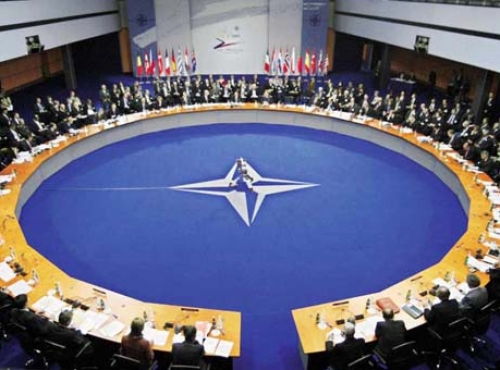


NATO promised on Wednesday, November 9 to defend all allies despite election victor Donald Trump's call to set conditions for U.S. help, as the alliance braced for a more impulsive leader some fear could withdraw funding to deter Russia, Reuters reports.
During the presidential election campaign Trump threatened to abandon U.S. allies in Europe if they do not spend enough on defence, comments that were particularly unnerving for the ex-Soviet Baltic states on Russia's border which fear Moscow might try a repeat of its 2014 annexation of Ukraine's Crimea.
NATO Secretary-General Jens Stoltenberg said NATO's promise to defend any ally under attack was an unconditional guarantee set out in the Western alliance's founding treaty in 1949.
"All allies have made a solemn commitment to defend each other and this is something which is absolute and unconditioned," Stoltenberg told a news conference, saying he would try to speak to Trump by telephone as soon as possible and would welcome him to a NATO summit in Brussels next year.
"The U.S. commitment to NATO and the collective defence of Europe has been rock solid for almost 70 years and I am absolutely confident that it will still be the case," Stoltenberg said, noting that two world wars had shown the importance of stability in Europe to the United States.
Trump's suggestion of making the United States' defence of its Western allies conditional was the first time a leading presidential candidate had raised the idea, putting him directly at odds with NATO's 27 other member states.
Diplomats questioned how long NATO's chief would be able to maintain a "business as usual" tone with a new U.S. leader who has expressed admiration for Russian President Vladimir Putin, condemned by the West for his actions in Ukraine.
"The idea that Trump's presidency is not going to create problems for NATO is delusional," said Dana Allin, a U.S. foreign policy expert at the International Institute for Strategic Studies (IISS).
The North Atlantic Treaty Organisation was founded around the central promise that an armed attack against one ally is an attack against all, whether it be on land, in the air or on the seas. NATO leaders in July added the area of cyberspace to that list of war fighting domains, although allies have to request NATO's help and decisions are on a case-by-case basis.
Trump, a Republican who had never previously run for office, assumes the presidency on Jan. 20 after defeating Democrat Hillary Clinton in Tuesday's U.S. election.
In one demonstration that not all U.S. Republicans share Trump's scepticism about NATO, Senate Majority Leader Mitch McConnell said on Wednesday he believes the NATO alliance "is every bit as important today as it ever was."
"I think Article 5 (of the NATO treaty) means something: you attack any member of NATO, you have us to deal with. I want the Russians to understand that fully," McConnell said in Washington when a reporter asked him if he shared Trump's attitude toward the alliance and Russia.
One of NATO's top commanders stressed that the debate about the alliance's role was not a theoretical one, given the powerful Russian air defence systems in the Baltic region, in Crimea and in Syria that could limit NATO's freedom of movement.
Allies need to build up a sophisticated air deterrent that can counter Russian long-range missiles, said General Denise Mercer, whose brief is to focus on future threats.