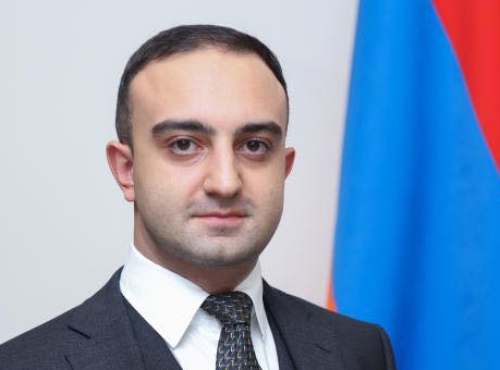











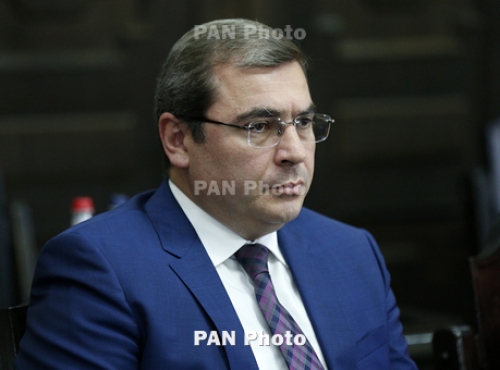


Former head of Armenia’s State Revenue Committee Davit Ananyan wrote on Facebook that nearly every day in Armenia a party holds a congress, rally, or announces a new initiative—and almost all speak about the economy.
He argued that the duty of a genuine political force is “not to flatter but to plan systemic change.”
“One promises to cut a tax, another to increase benefits, a third to ‘revive’ agriculture or industry with small programs,” Ananyan wrote, adding that such micro-promises fail to reflect the complexity of Armenia’s economic challenges.
“Discussions on the economy should not be based on opportunistic micro-promises but on macro-level ideology, conceptual approaches, and strategies for deep reform.”
Ananyan stressed that without a vision for a new economic model—focused on exports, productivity, fiscal culture, and institutional trust—all small programs remain slogans. Opportunistic pledges, he said, only devalue economic discourse and create meaningless public expectations that inevitably turn into disappointment.
He emphasized the need for macro-level diagnostics followed by short-, medium-, and long-term strategic roadmaps.
According to Ananyan, Armenia’s economy remains consumer-based, overly dependent on imports and remittances, which poses risks of instability and external vulnerability. Growth driven by imports and remittances, rather than productivity, creates “short-term shine but deep fragility,” leaving the country exposed to external shocks, debt burdens, and uncertainty.
He criticized Armenia’s fiscal policy for lacking macroeconomic strategy, describing it as mere bookkeeping instead of serving as an economic driver to create jobs, boost industry, and strengthen scientific-technological potential.
“Small projects in a few villages or targeting one or two sectors cannot change the logic of the entire economy. These are temporary temptations for short-term public satisfaction. Without a well-developed concept for the big picture, such promises will quickly fade,” he warned.
Ananyan concluded that Armenia needs a new tax system, an economy geared toward exports and industry under a small-economy model, regional development strategies, and improved logistics and institutions—all tied to rebuilding public trust.
Parliamentary elections in Armenia are scheduled for June 2026.