






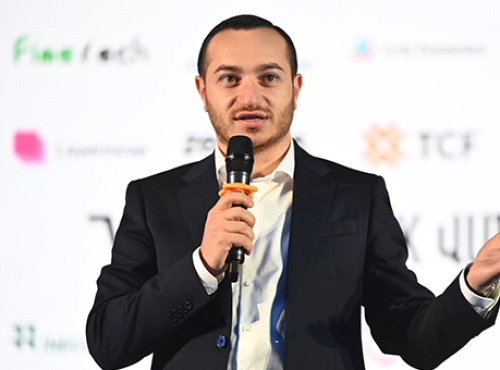


Minister of High-Tech Industry Mkhitar Hayrapetyan announced on Facebook that Google’s AI-powered video generation tool, Veo 3, is now accessible in Armenia.
He emphasized the tool’s broad range of applications as well as the associated risks.
Described as a revolutionary development, Veo 3 allows professionals across various fields to create high-quality narrative or artistic videos using only text prompts.
How Veo 3 can be used
Veo 3 can benefit sectors such as:
- Cinema and advertising: Producing videos without costly filming.
- Education: Visualizing content for historical, technological, or other subjects.
- Journalism and media: Crafting visual stories and messages.
- Culture and arts: Presenting heritage or creating new digital art forms.
- Science and research: Modeling phenomena and providing visual explanations.
- Business and marketing: Generating advertisements and branded storytelling.
But risks exist and must be considered
Being a powerful tool, Veo 3 can produce visuals that are nearly indistinguishable from real footage, leading to risks such as:
- Media manipulation: Spreading misinformation or distorting reality.
- Misuse of personal data: Replicating real individuals’ appearances.
- Psychological impact: Content that influences viewers through hyper-realistic visuals.
- Legal and ethical concerns: Copyright violations and the creation of visual deepfakes.
Why responsible use matters
As a tech-aware society, we must be equipped to use tools like Veo 3 both innovatively and responsibly. Technology should enhance communication, art, and knowledge—not deceive. Users should practice media literacy and verify seemingly credible videos before sharing them online, the statement concluded.