





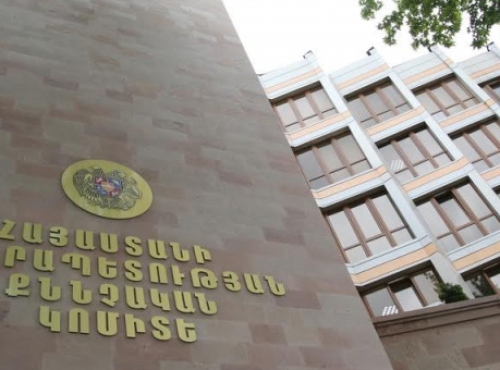


The Investigative Committee of Armenia has responded to recent public statements by defense lawyers for leaders and participants of the Sacred Struggle movement, accusing them of sharing excerpts of case evidence and personal interpretations in public forums while ignoring court-established procedures for examining evidence.
The statement stresses that all questions “can be answered only by a final court decision that has entered into legal force.”
According to the Committee, the defense is turning public platforms into “mini-trials” where they themselves debate and decide on the admissibility, credibility, and relevance of evidence, as well as on the defendants’ alleged actions and guilt, without opposing parties or formal legal process.
The committee expressed particular concern over lawyer Hovhannes Khudoyan’s persistence in seeking “the real targets” of Archbishop Bagrat Galstanyan’s controversial remarks about “shooting under walls and compensating families,” attributing them alternately to “deserters,” “drug dealers,” or “teammates.” It noted that the defense has now acknowledged Galstanyan as the speaker in the recording—something it previously disputed.
The Committee stated that any suggestion of permissibility or promotion of violence—especially by a cleric—should be unacceptable, and that the defense’s speculation does not diminish the evidentiary value of the recording. It urged similar attention to other classified investigative materials, including those indicating alleged preparations for terrorist acts aimed at destabilizing the state and causing harm to civilians and property.
The Committee argued that the defense’s approach is an attempt to influence public opinion and undermine a unique body of evidence obtained strictly within legal procedures, which forms the basis for the charges.
It concluded by calling on lawyers to respect the code of professional conduct, refrain from spreading misinformation, and address any procedural concerns through formal legal channels—such as motions, objections, or appeals.
Previously, defense lawyer Hovhannes Khudoyan published what he claims is the unedited version of the audio at the center of the case, arguing it shows the charges against Archbishop Bagrat Galstanyan are based on manipulated material. Lawyer Varazdat Harutyunyan called the case a politically motivated persecution built on doctored recordings.