










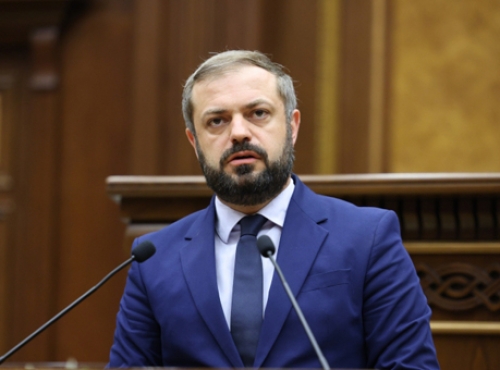


Armenia’s Economy Minister Gevorg Papoyan stated that the drop in foreign trade turnover, including exports, is primarily due to reduced re-exports. Speaking to Armenpress, he stressed that such activity had little to no real impact on the economy and will not affect growth.
According to Papoyan, Armenia’s exports to the European Union this year have shown “qualitative growth,” with finished products increasingly entering European markets.
He explained that of the $4.25 billion reduction in trade, about $4 billion was gold, unprocessed or semi-processed, that came into Armenia and was re-exported unchanged, mostly to the UAE. “No real value was created in Armenia. These flows brought no benefit to the economy and even posed serious risks of sanctions,” Papoyan noted.
Despite the drop in turnover, Armenia’s economy grew 5.6% in the first half of 2025, with double-digit growth in tax revenues and tourism, as well as strong gains in agriculture.
The minister emphasized that re-exports never contributed to GDP growth: “Even last year’s nearly 6% growth had almost nothing to do with re-exports.”
On EU exports, Papoyan pointed to the government’s program that compensates customs duties for exporters. He said it has been effective, particularly in supporting exports of finished goods.
In January–June 2025, exports of processed food to the EU grew by 56%, while beverage exports rose by 20%. Only light industry products fell slightly, by 1%, though Papoyan expects significant textile growth in the second half of the year, citing growing applications for customs duty reimbursements.
“This program works well and will continue to do so. Our exports to the EU this year represent qualitative growth,” he concluded.
Papoyan also shared updates on Armenia’s pavilion at EXPO 2025 in Osaka, noting higher-than-expected visitor numbers and anticipated results.