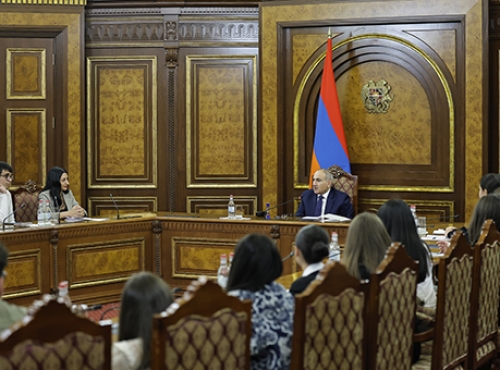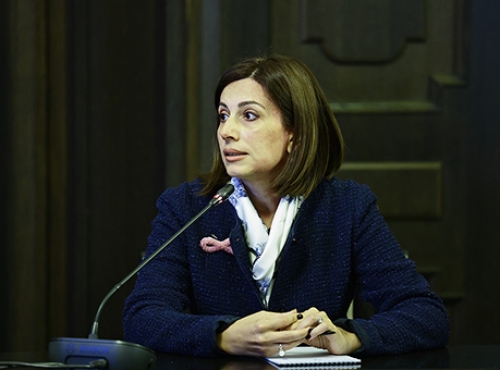












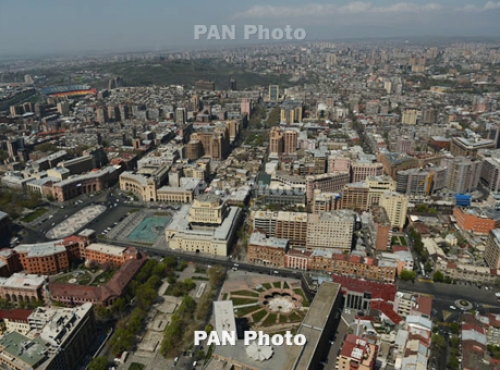


Armenia’s permanent population reached approximately 3.075 million as of January 1, 2025—an increase of about 84,000 compared to 2024, according to the Statistical Committee of Armenia. The urban population is 1.8 times greater than the rural population. On World Population Day, Florence Bauer, Regional Director for Eastern Europe and Central Asia at the United Nations Population Fund (UNFPA), presented a summary report on global and Armenian demographic trends.
The UNFPA’s State of World Population 2025 report highlights that many people—especially young individuals—today have fewer children than they desire. A survey conducted in 14 countries revealed that key obstacles are social, economic, and health-related.
The report states: “It is crucial to prioritize the needs and voices of young people and ensure the protection of their rights, which is vital for promoting stability, peace, and human dignity. Young people need not only services but also hope, stability, and a promising future.”
The document also outlines the global trend of population growth, noting that while it took humanity hundreds of thousands of years to reach one billion people, that number increased sevenfold in just two centuries. Projections suggest the global population will reach 8.5 billion by 2030, 9.7 billion by 2050, and 10.9 billion by 2100—after which it is expected to decline.
According to the report, women in the early 1970s had an average of 4.5 children. By 2015, this fertility rate had dropped to below 2.5 children per woman. Meanwhile, life expectancy rose from 64.6 years in the 1990s to 72.6 years in 2019.
As a result, structural demographic shifts are expected in the near future: the share of elderly people will increase, while the proportion of youth and the labor force will decrease.
The report also emphasizes the rapid pace of global urbanization and intensified migration. In 2007, for the first time, the number of urban dwellers surpassed those in rural areas. By 2050, about 66% of the world’s population is projected to live in cities.
UNFPA forecasts that, if current conditions persist, Armenia’s population could decline to about 2.373 million by 2050, accompanied by a notable increase in the elderly share of the population.
Between 2018 and 2023, Armenia saw a slight rise in the average number of children born per woman, with the fertility rate reaching 1.9. However, according to the Statistical Committee, more than 60% of households have no children. About 16% have two children, 15% have one child, and only about 7% have three or more. UNFPA estimates that most Armenian couples would ideally like to have three children.
The report concludes: “Therefore, it is essential to eliminate economic (funds, housing, jobs), social, health, institutional, and other barriers that prevent especially young people from having as many children as they wish.”
World Population Day aims to highlight the urgency and importance of population issues. It was established in 1990 under UN resolution 45/216, in response to “Five Billion Day” observed on July 11, 1987, when global population reached that milestone. Today, it is marked in over 90 countries.