








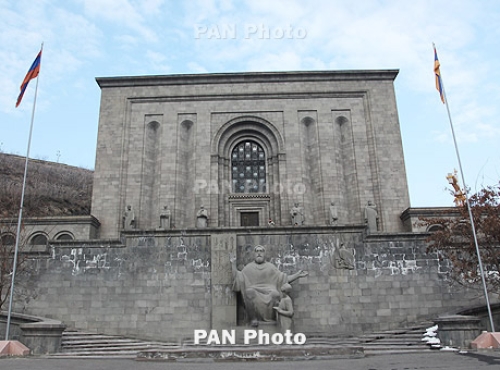


The Mesrop Mashtots Institute of Ancient Manuscripts, better known as Matenadaran, is set to launch a groundbreaking online platform in early 2026 that will provide digital access to nearly all known Armenian manuscripts around the world, according to Armenpress. The initiative, funded by the Calouste Gulbenkian Foundation, aims to unify dispersed but invaluable Armenian manuscript heritage in a single, high-quality online database.
For over 18 years, Matenadaran has been engaged in a large-scale digitization effort to preserve and make Armenian scripts, literature, and cultural heritage publicly accessible. The upcoming platform will feature tens of thousands of ancient manuscripts, codices, and books currently housed in various institutions across different countries.
Gurgen Gasparyan, Matenadaran’s advisor on high technologies and publishing and coordinator of its digitization and codicology division, highlighted the scope of the project and its global relevance. He explained that the digitization effort began in 2007 and has already resulted in over 8,000 digital images of the approximately 13,000 manuscripts held in Yerevan. These are available to researchers upon request.
Gasparyan emphasized that Matenadaran is a regional leader in manuscript digitization and that its methodologies could serve as a model for other centers. Equipped with advanced scanning technology, some acquired through donations, the institute also collaborates with Armenian studies centers abroad—including in Jerusalem, Venice, Vienna, Paris, St. Petersburg, and Moscow—providing expertise in digitization.
A new software is currently under development to support the platform, which will integrate detailed descriptions with manuscript images. The aim is to drastically simplify the process of locating and referencing manuscripts—tasks that previously could take years.
“This project will allow any researcher or scholar to find relevant manuscript data in seconds. This accelerates academic work and enhances the development of Armenian studies,” Gasparyan said.
He also mentioned that Matenadaran publishes manuscript descriptions in its ongoing series, the “Main Catalogue of Armenian Manuscripts,” which currently includes 11 volumes covering around 3,700 manuscripts.
These descriptions include details on appearance, illumination, materials, and more—key data for researchers seeking historical sources. This catalog will serve as the foundation for the new digital platform, which will eventually include data on manuscripts held in foreign collections. The system will incorporate layers powered by artificial intelligence.
Gasparyan estimates that around 35,000–40,000 Armenian manuscripts exist worldwide, with 12,000–13,000 located in Yerevan. He acknowledged that full repatriation is unlikely, as foreign institutions are cautious about relinquishing such collections.
He praised the extensive work of the Matenadaran team and stressed the importance of Armenian studies conferences in fostering collaboration, knowledge sharing, and global cultural representation.