






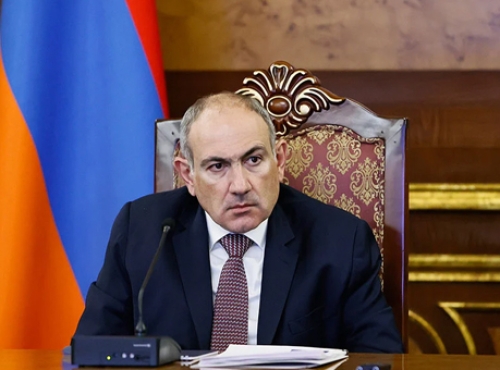


Prime Minister Nikol Pashinyan outlined a proposal on Facebook for major changes within the Mother See of Holy Etchmiadzin. He suggested removing Catholicos Ktrich Nersisyan and appointing a morally upright, married priest as acting patriarch, who would not be eligible to run for Catholicos.
According to Pashinyan, new elections should not take place until a reformed Canon Law of the Armenian Apostolic Church is approved, based on the historical Canon of the Armenians. He emphasized this document must be concise, in modern Armenian, and accessible to both clergy and laypeople. Currently, he noted, most believers and even many clerics are unfamiliar with the complex, classical-language canon, which was developed over 17 centuries.
Pashinyan framed the removal of the current Catholicos as “a spiritual necessity rather than a political move”. "Freeing the Catholicosate from Ktrich Nersisyan is first and foremost a spiritual agenda. Without spiritual renewal, we cannot set moral standards for the state and society," he wrote.
He warned against merely replacing the current patriarch with another cleric who has violated monastic vows, calling such a move a political maneuver, not spiritual reform. His proposed roadmap includes:
- Releasing the current Catholicos from the Catholicosate.
- Appointing a married priest of good moral standing as acting patriarch, who is ineligible for election.
- Postponing elections until the new Canon Law is ratified.
Once the new canon is adopted—by a National Church Assembly or similar body—it would also regulate the nomination process, candidate eligibility, and election procedure. All candidates must undergo moral vetting.
Commenting on the "Worthy Catholicosate" movement, Pashinyan stated its leaders must meet spiritual criteria: they must be adherents of the Armenian Apostolic Church, deeply believe in Christ, have read the Bible fully at least once, observed Lent in the past five years, pray daily, and recognize the spiritual reform as aligned with national and ecclesiastical heritage.
Though difficult to empirically verify all standards, Pashinyan said a communicative approach can ensure accountability. He declared his own leadership of the movement, affirming he meets all outlined criteria.
He closed by stressing that the reform agenda is not a call for a religious regime: “It restricts no citizen’s freedom but rather sends a clear message that full public accountability is expected from both church and state leaders.”