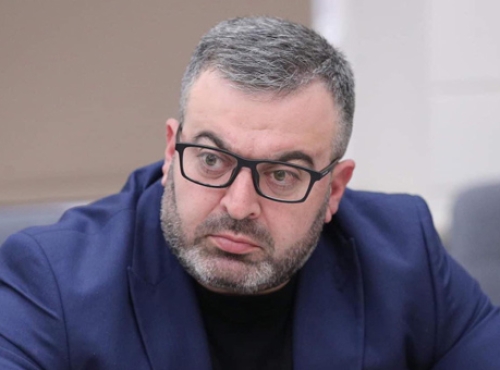













Armen Khachikyan, executive director of the ARAR Foundation, wrote on Facebook that, according to the foundation’s recent survey, around 65% of Armenians do not believe negotiations with Azerbaijan can achieve stable and long-term peace. Only 34% think peace is possible.
The poll covered Armenian-speaking residents of Armenia aged 18 and older.
Khachikyan noted that documents signed under U.S. President Donald Trump’s mediation may fail to guarantee security and peace, just as the November 9, 2020, agreement mediated by Russian President Vladimir Putin did not.
“Peace is not begged for; it is earned by building strong and viable security,” he wrote.
According to him, at least two-thirds of society sees no prospect for lasting peace. Over the past year, survey results have barely changed, with small fluctuations linked mainly to the political agenda and public debate at the time.
He stressed that this reflects deep public mistrust shaped by years of experience, memories of war, and Azerbaijan’s continued hostile behavior. When most of the public does not believe in peace, even the best-intentioned talks can be seen not as hope for the future but as a dangerous risk.
On August 8, at the White House, Armenian Prime Minister Nikol Pashinyan, U.S. President Donald Trump, and Azerbaijani President Ilham Aliyev signed a joint declaration on the results of the Washington meeting. In Washington, Armenian Foreign Minister Ararat Mirzoyan and Azerbaijani Foreign Minister Jeyhun Bayramov, in the presence of the leaders of Armenia, Azerbaijan, and the U.S., pre-signed the “Agreement on Establishing Peace and Interstate Relations between the Republic of Armenia and the Republic of Azerbaijan.”