











Hayastan parliamentary faction has issued a statement responding to the August 8, 2025, announcement following a trilateral meeting in the United States attended by Prime Minister Nikol Pashinyan, and to the preliminary peace agreement between Armenia and Azerbaijan. According to the faction, these documents, which the government presents as significant achievements, “have nothing to do with real peace and contain new existential threats to Armenia and the Armenian people.”
The statement lists key concerns:
- They attempt to legitimize ethnic cleansing and genocidal policies carried out by Azerbaijan against Armenians of Nagorno-Karabakh, hostage-taking, sham trials, the erasure of Armenian heritage from the region, the removal of the Karabakh issue from the international agenda by dissolving the OSCE Minsk Group, and the occupation of sovereign Armenian territories.
- They do not lift the more than three-decade-long Turkish-Azerbaijani blockade and hostile actions against Armenia; instead, they grant Azerbaijan an unobstructed corridor through Armenian sovereign territory, further limiting Armenia’s sovereignty and creating new conditions for continued aggression.
- The documents lack international standards for conflict resolution, commitments to protect fundamental human rights and freedoms, and effective international guarantees.
- Articles 8-9 and 15 of the preliminary agreement contain provisions that could be used against all Armenians who participated in the Karabakh liberation struggle, obscure Azerbaijani crimes, and deprive Armenia of legal tools to hold perpetrators accountable.
- Even the provisions that nominally declare respect for territorial integrity, mutual commitment to peace, and non-interference in internal affairs lack binding international guarantees and rely solely on Azerbaijan’s goodwill, which is contradicted by its current preconditions such as abandoning the Declaration of Independence and constitutional amendments.
The faction insists that true regional peace and long-term stability, based on the right of nations to self-determination, require balancing interests, real parity of power, and binding international guarantees. It calls for strengthening Armenia’s internal and external security, fostering national unity, reinforcing state institutions, and engaging external allies.
The statement warns that without addressing these issues, the signed documents represent serious harm to Armenia. It accuses Pashinyan of abusing constitutional powers, misleading the public with false peace narratives, and seeking to prolong his rule. The faction rejects any further concessions to Azerbaijan, asserting that Armenia can restore dignity and build a strong state by ending the current regime.
Separately, the Country to Live party emphasized the need for durable peace around Armenia with international support, but criticized the government for presenting existing challenges as “unprecedented success” while avoiding acknowledgment that this “unprecedented” outcome came at the cost of abandoning the name of Artsakh and failing in direct talks with Azerbaijan.
The party stressed that the return of Armenian prisoners of war must be a clear demand to both Baku and the international community as a precondition for real peace. It also said the withdrawal of Azerbaijani forces from Armenian sovereign territory and the delimitation of borders should be binding obligations with set deadlines.
According to the party, the agreement lacks any obligation for Azerbaijan to unblock transportation routes, mentioning only the “importance of opening communications between the two countries.” It warned that Baku’s anti-Armenian policy and baseless demands continue, and described the promotion of a “peace illusion” as a dangerous pre-election manipulation. The party concluded that the current government is incapable of protecting Armenia’s interests within agreements with Azerbaijan, and called for a new administration built on prudence, professionalism, and dedication.
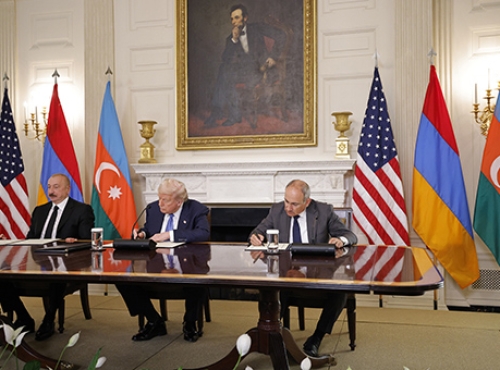
On August 8, at the White House, Prime Minister Nikol Pashinyan, U.S. President Donald Trump, and Azerbaijani President Ilham Aliyev signed a joint declaration summarizing the meeting’s results. In Washington, Foreign Ministers Ararat Mirzoyan of Armenia and Jeyhun Bayramov of Azerbaijan preliminarily signed the “Agreement on the Establishment of Peace and Interstate Relations between the Republic of Armenia and the Republic of Azerbaijan” in the presence of the three leaders.