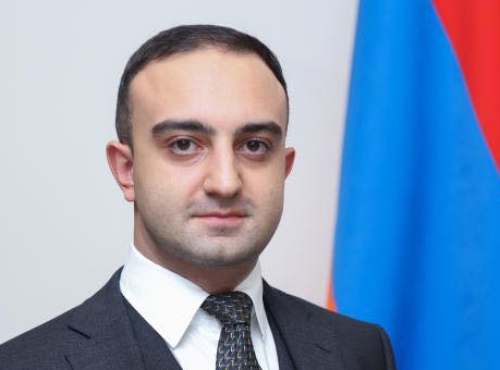












Doctor of Law and professor Gevorg Danielyan stated that the “so-called peace agreement is not only a classic example of self-deception but also fraught with unpredictable developments.”
According to Danielyan, the document defines Azerbaijan’s sole obligation as refraining from the use of armed force against Armenia in the future.
“It creates the impression that until now Azerbaijan had a fully legitimate right to do so. The roots of the excitement over this absurd clause lie also in domestic propaganda, which for no reason circulated the thesis that ‘we must not give Azerbaijan a legitimate pretext for war.’ There was no proper counterargument that war itself is inherently illegitimate — a violation of the principles of international law and an international crime — and that all disputes must be resolved exclusively by peaceful means,” he said.
He argued that even the term “peace agreement” is wholly disconnected from reality and serves only domestic propaganda purposes. Danielyan noted that through this document, Azerbaijan has essentially committed only to fulfilling the UN Charter’s requirements — despite having repeatedly ignored UN Security Council decisions and international court rulings, particularly regarding the unblocking of Artsakh.
“This means that Azerbaijan, as a UN member, has now only undertaken through this agreement to finally follow the UN Charter, and given how little value this country places on ‘obligations,’ one only needs to recall that it disregarded UN Security Council resolutions and international court rulings, including on unblocking Artsakh,” he said.
Danielyan stressed that the roots of the current situation date back to immediately after the 44-day war. Just 20 days after the war ended, Azerbaijan announced it had allegedly calculated about $100 billion in damages through a special commission and intended to appeal to international courts. This figure was later increased, which, according to him, later served as a pretext for avoiding balanced proceedings in international forums.
He added that while there will be an opportunity to address the document and its omissions in greater detail later, what is troubling is that it records — at least on paper — the exclusion of military clashes, achieved at great cost, while creating grounds for similar conflicts with other countries, or at least for a long-term deterioration in relations.
“It is no coincidence that in the U.S. it was advised that their president sign only an abstract trilateral declaration, which would be less vulnerable — though that, too, is another kind of ‘masterpiece’…” Danielyan said.
On August 8, Armenian Prime Minister Nikol Pashinyan, U.S. President Donald Trump, and Azerbaijani President Ilham Aliyev signed a Joint Declaration at the White House following their trilateral meeting. In Washington, Armenian Foreign Minister Ararat Mirzoyan and Azerbaijani Foreign Minister Jeyhun Bayramov, in the presence of the leaders, preliminarily signed the “Agreement on the Establishment of Peace and Interstate Relations between the Republic of Armenia and the Republic of Azerbaijan.”