








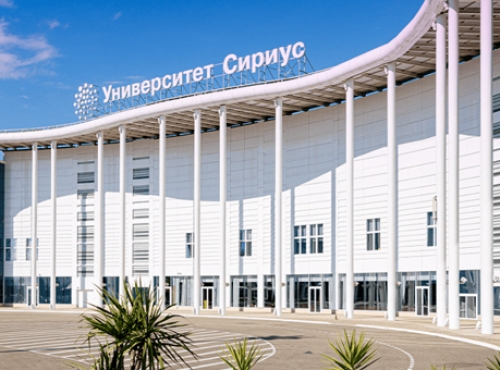


Russian President Vladimir Putin met with young scientists at the scientific-technological university Sirius, where he viewed the latest developments in the project, analytical, and chemical laboratories.
“I really wanted to see what has happened in these ten years—from the first step, on 1 September 2015, up to today. I see that the movement is very serious. Besides the school, a university emerged, a laboratory complex—across various directions,” he said, according to RIA Novosti.
In the synthesis laboratory, the president was briefed on the development of drugs for rare congenital diseases. He also visited a department working on cancer treatment drugs. Arseny Yuzhalin, head of the translational medicine research group, presented a project on therapy for malignant central nervous system tumors, where patients typically survive three to 12 months after diagnosis. No effective treatment exists yet, and current methods are largely palliative.
“Our youth project aims to find new therapeutic strategies for such cancers. In particular, we are working on immuno-oncology: trying to repurpose immunologically ‘cold’ tumors into ‘hot’ ones to enhance immune cell infiltration into the tumor and thus defeat cancer,” he said. Scientists expect that their developments will improve outcomes for cancer patients.
In the agricultural genetic technology laboratory, Putin was shown some plants: a Merlot grape variety resistant to fungal infections and a “rejuvenating strawberry” containing 12 times more quercetin. “And neither needs chemical treatment, right?” Putin asked.
Roman Ivanov, head of the university’s scientific council, answered affirmatively. He explained that these are not genetically modified organisms: no foreign genetic material is introduced. Instead, point mutations are made in the genome, mimicking evolution but accelerating it hundreds of times and doing so purposefully.
Ivanov also described a project codenamed TouchFeel: a method to allow a person to feel an image, for example, the fur of a cat when touching a phone screen. This technology could be used in remote surgeries, so a surgeon can feel an organ or a blood vessel. Scientists also hope it will restore tactile sensation to people with prosthetic limbs. The technology is being developed by a Russian-speaking Estonian citizen, who previously worked in Germany and came to Sirius thanks to grant support.
Deputy head of the research group, Konstantin Gnidko, spoke to Putin about new methods to counter previously unknown quantum threats. He explained that the advent of quantum computers would instantly compromise all existing encryption tools, and whoever develops such technology could hide its existence to act in their own interests. “Observing what others are doing,” the president interjected. The scientist noted that countering this threat requires the development of new algorithms, methods, and software, and Putin wished success to his team in this area.
The scientific-technological university Sirius was established in 2019 by the Talent and Success Foundation. It carries out projects in genomics, immunobiology, biotechnology, neurobiology, gene therapy, plant genome editing, robotics, clinical psychology, and mathematical modeling. Under leading scientists, 17 scientific-educational directions have been developed, aiming to create technologies and science-intensive solutions to meet the “big challenges” of Russia’s Science and Technology Development Strategy. Young researchers are attracted through the federal “Sirius scientific-technological territory development” program. Specialists from Russia, the U.S., Germany, and Estonia work across these 17 new research teams.