









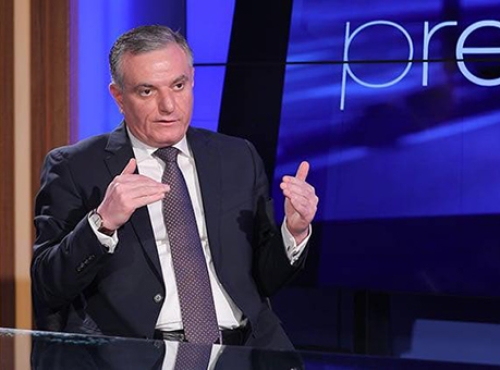


Armenian Republican Party board member Artak Zakaryan wrote on Facebook that Turkey and Azerbaijan view the road through Syunik as a key element for unhindered transport links, not only between themselves but also connecting Asia and Europe.
He emphasized that while Azerbaijan is building the eastern section linking to Syunik, Turkey is simultaneously working on the western part.
“Since the 44-day war, Baku has persistently demanded that Armenia create what it calls the ‘Zangezur corridor’ in Syunik, seeking to integrate its logistics into Turkish mega-projects. Azerbaijan is rapidly constructing the Horadiz–Agbend railway, meant to connect from the east to the Syunik route. According to Azerbaijan Railways, 67% of the work is already completed. The 106 km line was inaugurated in October 2021 by President Erdogan himself, after Armenia’s snap elections, when Ankara and Baku were confident the Karabakh issue would be resolved in Azerbaijan’s favor, ensuring them an uninterrupted passage to Nakhichevan. Construction on this section of the so-called ‘Middle Corridor’ began at that time.
While Azerbaijan builds the eastern link, Turkey is advancing on the western side. The 224 km Kars–Dilucu railway is one of the most important elements of Ankara and Baku’s ambitious plans. Once completed in 2029, travel from Kars to the Azerbaijani border will take only 85 minutes. This will drastically alter the region’s logistics. Kars will become the main freight hub, Igdir a trade center, while Aralik and Dilucu will serve as strategic crossings. Freight traffic is expected to reach up to 15 million tons annually, with passenger flow of 5.5 million.
Turkey’s leadership calls the project a ‘bridge between Asia and Europe’ that will strengthen its role in the ‘new Silk Road’. Economically, the new line, integrated with the Baku–Tbilisi–Kars route, is expected to raise the share of rail freight in Turkey’s foreign trade from 1% to 4%. The corridor is also planned to include oil and gas pipelines as well as fiber-optic cables. Significantly, the railway is financed by Japanese, Austrian, Swedish, and EU companies,” Zakaryan wrote.
He added that Turkish politicians’ statements show Ankara is confident an unhindered road through Syunik will be opened, without which both the Azerbaijani Horadiz–Agbend and the Turkish Kars–Dilucu projects would be meaningless.
“However, the unblocking of routes through Syunik remains complex and controversial. Armenia must continue to insist on reopening the Ijevan–Qazakh railway instead of the Zangilan–Nakhchivan line. This line, though built later, linked Azerbaijan and Nakhchivan through Yerevan, not Syunik. It could significantly enhance Armenia’s role in international freight and strengthen its railway network.
If Armenia pushes for the Ijevan–Qazakh junction, its logistical role, security, and economic benefits will grow, while the passageways through Syunik will no longer pose a threat to its sovereignty and territorial integrity.
Among other factors, Ankara and Baku’s ‘transport and logistics ambitions’ also face resistance from Iran. Tehran is promoting its own project — the revival of the ‘Aras transit corridor’ as a shortened route between Azerbaijan and Nakhchivan. This could serve as an alternative to the Syunik pathways.
In 2022, Azerbaijan and Iran announced an agreement to construct such a corridor through Iran’s East Azerbaijan province. Yet, geopolitical difficulties and high infrastructure costs caused the project to lose momentum. Now, Azerbaijan’s focus has shifted entirely to routes crossing Syunik.
Which of the three routes will prevail — the Armenian Ijevan–Qazakh, the Iranian Aras, or the Turkish-Azerbaijani Syunik line — remains to be seen. At present, the final word belongs to the United States, which until recently showed little interest in South Caucasus connectivity. But American ambitions toward the Caspian Sea and Central Asia are becoming tangible,” Zakaryan wrote.
He noted that the 2026 elections will also play a decisive role.
“Under conditions of government continuity and constitutional changes in Armenia, the Turkish-Azerbaijani version of regional transit corridors will likely advance. How acceptable this will be for Iran, Russia, Georgia, and Armenia is easy to imagine. What is clear is that the South Caucasus stands at the threshold of unresolved and contradictory issues, which may trigger new regional clashes, sidelining the existing models of corridor unblocking,” the post said.
In a related note, Prime Minister Nikol Pashinyan, Azerbaijani President Ilham Aliyev, and U.S. President Donald Trump officially agreed in Washington to launch the so-called “Trump Route.”
“The route will allow Azerbaijan to reach Nakhchivan while fully respecting Armenia’s sovereignty. Armenia will also establish an exclusive partnership with the U.S. to develop this corridor, with rights extendable up to 99 years. Major infrastructure development is expected, with American companies eager to enter these markets and invest heavily, bringing economic benefits to all three states,” Trump said.
On September 11, Pashinyan clarified that Armenia had not leased land to the U.S. for 99 years but granted development rights instead.