










Artsakh’s Ombudsman for Cultural Heritage Hovik Avanesov issued a statement highlighting the destruction of Armenian cultural identity following Azerbaijan’s September 2023 offensive and the forced displacement of Artsakh Armenians.
He said documented cases and violations prove that one of the largest cultural genocides globally is underway: “The Baku regime has adopted a strategy of systematic erasure of cultural heritage to eliminate traces of the Armenian people’s historical presence in Artsakh.”
Avanesov recalled that on September 19, 2023, under blockade conditions, Azerbaijan, supported by Turkey, launched a large-scale attack on Artsakh. Civilian infrastructure and populations were prioritized as targets, which he described as war crimes.
He stressed that Artsakh was temporarily seized and its Armenian population forcibly removed from ancestral lands, calling it not only ethnic cleansing but also “a direct assault on the pillars of Armenian identity.”
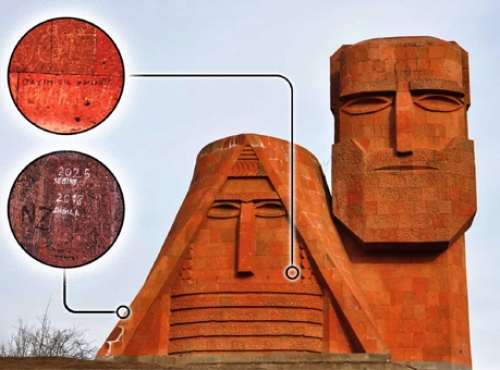
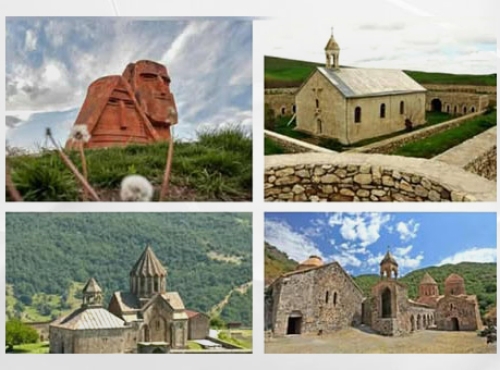
Since the 2020 war, he said, Azerbaijan’s actions have included the deliberate destruction of Artsakh’s cultural heritage—churches, khachkars, cemeteries, historic districts, and cultural institutions—an inseparable part of world heritage.
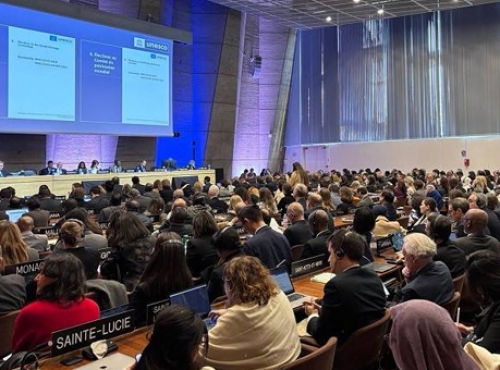
Avanesov criticized the international community’s response as inadequate, often limited to “ceremonial statements,” avoiding the use of the terms genocide or cultural genocide. This silence, he warned, emboldens Baku’s policies and creates a dangerous precedent for future crimes.
On September 19, 2023, Azerbaijan launched a large-scale offensive against Artsakh. A ceasefire was accepted on September 20 under Russian mediation, leading to the disarmament of Artsakh’s forces and dissolution of the Republic. From September 24, over 100,000 Armenians were forcibly displaced to Armenia, leaving only about 20 Armenians in Artsakh. On September 28, President Samvel Shahramanyan signed a decree dissolving the Republic, effective January 1, 2024.