










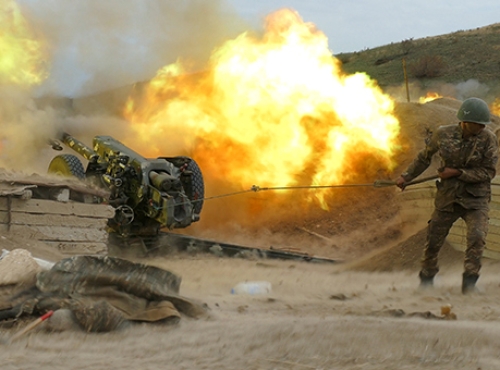


Five years after the 44-day war, Armenian prisoners are still being held in Azerbaijani prisons. On September 27, 2020, Azerbaijan launched a large-scale military offensive with Turkey’s support, attacking across almost the entire line of contact. The operation included airstrikes, artillery, and drones, with residential areas also targeted by missile fire.
Both sides suffered thousands of casualties. According to official Armenian data, the country lost 3,830 soldiers during the 44-day war.
Azerbaijan managed to seize Hadrut, Shushi, and southern regions of Nagorno-Karabakh previously under Armenian control.
A trilateral ceasefire agreement was signed on November 9 by the leaders of Russia, Armenia, and Azerbaijan. As a result, Azerbaijan gained control over the regions of Karvachar, Aghdam, and Lachin (excluding the Lachin corridor), as well as parts of Hadrut, and some villages in the Askeran and Martakert regions. Russian peacekeepers were deployed along the contact line and the Lachin corridor.
This status quo remained until September 19, 2023, when Azerbaijan launched a new attack on Nagorno-Karabakh, which had been under blockade for more than nine months. The entire region was depopulated of Armenians and fell under full Azerbaijani control.
Five years on, Armenian captives are still held in Baku’s prisons. In 2023, former political and military leaders of the Nagorno-Karabakh Republic were detained, following the region’s depopulation.