







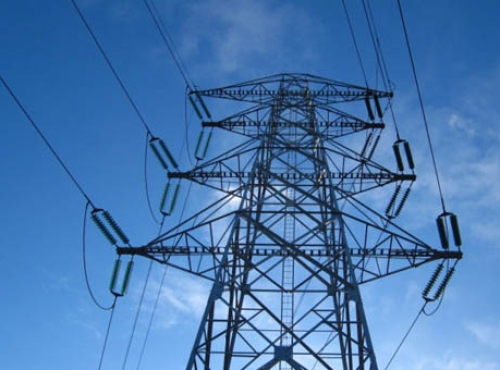


Construction of the Iran–Armenia 400-kilovolt high-voltage line is expected to reach its first stage completion in the first half of 2026. This includes commissioning the first circuit from the Iranian border to the under-construction Noravan substation in the Sisian region, according to the press service of High Voltage Electric Networks CJSC under Armenia’s Ministry of Territorial Administration and Infrastructure, Sputnik Armenia reported.
At this stage, the first circuit will be launched, running from the border with Iran to the Noravan substation. Some work has been postponed to next year since construction takes place in mountainous areas that become difficult to access from mid-October or early November.
Following the partial connection, construction will continue until the project’s full completion. The line will eventually consist of two circuits extending to Ddmashen, near Lake Sevan, where another substation will also be built.
“As a result, the electricity exchange capacity between Iran and Armenia will increase from the current 330 MW to more than 1,000 MW. However, this will only happen once the entire line with two circuits is completed and connected to the Ddmashen substation. After partial completion, one circuit to the Noravan substation, the capacity will reach about 500 MW,” High Voltage Electric Networks CJSC stated.
The Ddmashen substation will also form part of the planned Armenia–Georgia high-voltage line. From Ddmashen, a 400 kV line will extend to the Georgian border. Construction work on this section is expected to begin soon.
The project has three components: the Ddmashen substation, the border-based Ayrum converter station, and the high-voltage line between them. The converter station will be built at the border to ensure a stable connection between the Armenian and Georgian energy systems, which currently operate with interruptions at different frequencies, while also increasing transmission volumes.
Tenders for the Ddmashen and Ayrum substations have been extended until November. The tender for the transmission line itself was held in August, with India’s KEC International Limited winning the contract.
Over the next three and a half years, the company must build about 109 km of 400 kV transmission lines.
Armenia currently lacks 400 kV power lines. On the Iran route, there are two 220 kV lines, while toward Georgia, one 220 kV and two 110 kV lines exist. The Iran–Armenia 400 kV line is being built with a loan from Iran (with a Syrian company as contractor), while the Georgia-bound line is financed by Germany’s KfW Bank. These projects will allow Armenia to significantly expand electricity exports and transit capacity.
The completion of the Iran–Armenia line has been delayed several times, while the Armenia–Georgia project’s tender process has been prolonged for nearly a decade due to planning uncertainties.