







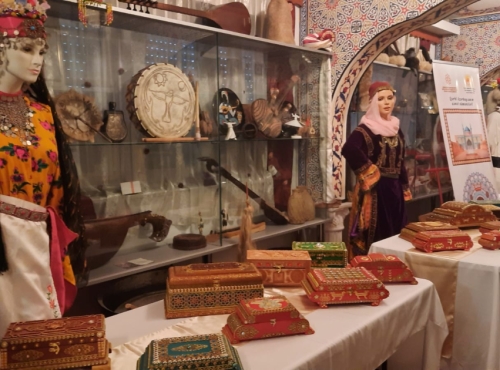


The cultural heritage watchdog Monumentwatch.org has raised concerns over a recent exhibition titled “Western Azerbaijan Handicrafts” held in Nuremberg, Germany, stating that the term “Western Azerbaijan” is being used by official Baku to reference the sovereign territory of Armenia.
The exhibition, organized by the “Support for the Preservation and Promotion of Applied Art” NGO, ran for five days across various venues including the Turkish History and Cultures Museum and featured art shows, discussions, and cultural evenings. Azerbaijani media began promoting the project on September 24.
Monument Watch argues that the project name itself is politically charged, embedding a territorial claim into what is presented as a cultural initiative. “In Baku’s official discourse, ‘Western Azerbaijan’ refers to Armenian territory, which it presents as ‘historically Azerbaijani land,’” the analysis notes.
According to the report, these types of initiatives aim to rewrite the region’s historical narrative, rebranding Armenian cultural heritage as part of a broader Turkic identity. The presence of Amir Ali Sardari Iravani, introduced as a descendant of the last khan of Yerevan, reinforces this message, framing applied art as not just cultural expression, but as a tool of national memory and identity.
The project was funded by Azerbaijan’s State Support Agency for NGOs, marking it as part of the country’s cultural diplomacy strategy. Monumentwatch concludes that the Nuremberg exhibition was not a simple artistic event but a calculated extension of Azerbaijan’s cultural policy aimed at denying Armenian heritage and asserting ideological territorial claims.
Prime Minister Nikol Pashinyan previously responded to such narratives, stating that “Western Azerbaijan” does not and cannot exist within Armenia’s sovereign territory, calling the notion inadmissible and legally groundless.