







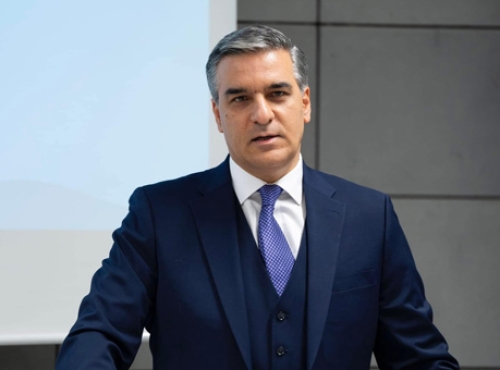


Former Human Rights Defender of Armenia, Arman Tatoyan, stated in a Facebook post that launching a criminal case against the Catholicos or pursuing legal action against him is part of a politically driven scenario devised by the authorities.
He emphasized that the Prime Minister has no legal right to access information regarding individuals’ private lives, including wiretaps or surveillance data from law enforcement, investigative bodies, or courts.
“How could a wiretap related to clerics from years ago end up in government-affiliated media? That’s the first question we all should ask,” Tatoyan wrote.
He questioned whether state authorities are using law enforcement agencies to serve narrow political interests, or if the authorities themselves are conducting illegal surveillance, preserving materials for years to use them at politically convenient moments. “It turns out that’s exactly what’s happening,” he stated.
Tatoyan highlighted the fact that the leaked recordings were first distributed by ruling party media outlets, including the official newspaper of the Civil Contract Party, platforms reportedly owned by the Prime Minister’s family, and media associated with the deputy chief of the PM’s staff. He questioned the pattern where these outlets create public buzz with damaging material and law enforcement just “coincidentally” picks it up for review.
He reiterated that the Prime Minister cannot lawfully receive or access surveillance materials, including recordings. “These restrictions are mandated by Armenia’s laws, the Constitution, and international legal standards, to shield such information from political abuse, including by the Prime Minister himself.”
Tatoyan also noted that, alongside the release of these materials, Civil Contract MPs and government allies have actively circulated anti-church content to create a false impression that they are acting within the law.
“Instead of solving our numerous national problems, massive resources and law enforcement efforts are being diverted to unlawful actions that weaken the state and undermine our national resilience. These acts are politically motivated and aligned with Azerbaijani demands,” he wrote, calling this “a gift to Azerbaijan’s expansionist ambitions.”
According to Tatoyan, the government’s conduct discredits the Armenian nation globally and insults its core values. He stressed that no one will benefit from this destructive approach.
“It’s evident that the authorities have no intention of establishing the rule of law or confronting institutional dysfunction. This is merely another blow to Armenia’s international image, democracy, and national identity,” he added.
Tatoyan concluded that internal church issues, if any, should not be exploited in such a way as to divide society and spread hatred. “Neither the Prime Minister, nor MPs of the Civil Contract faction, nor any other officials have the authority to handle matters like this.”
He also clarified that the criticism is not about condoning any wrongdoing but about exposing the misuse of power: “They aim to silence dissent by portraying anyone who raises concerns as a supporter of misconduct, while diverting attention from their own illegal behavior through propaganda.”
The criminal case was initiated over an audio recording allegedly involving Archbishop Nathan Hovhannisyan and former priest Aghan Abbot Yernjakyan, which was recently circulated online.