










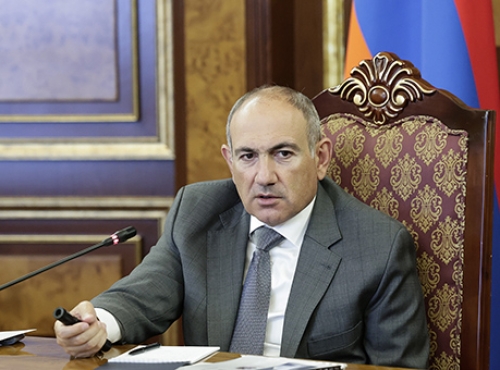


At the Yerevan conference “Building Peace and Multilateral Cooperation,” Prime Minister Nikol Pashinyan stated that the Washington agreements between Armenia, Azerbaijan, and the U.S. have created new regional opportunities, including within the Eurasian Economic Union (EAEU).
“Many say these developments contradict EAEU interests, but this is a clear example of potential benefits,” Pashinyan said, as reported by Sputnik Armenia.
He noted that despite existing trade between Armenia and fellow EAEU member Kazakhstan, volumes remain low due to inaccessible and inconvenient transport routes. The new framework could address that gap.
Pashinyan also responded to Azerbaijani President Ilham Aliyev’s remarks on easing transit through Armenia, noting that Central Asian states stand to benefit first from the corridor.
“We’re also very eager to deepen our political and economic ties with Uzbekistan,” he added.
Pashinyan reaffirmed Armenia’s readiness to support cargo movement through Turkey to Azerbaijan via Margara and Khndzoresk, and vice versa.
“This is the only route where all infrastructure is already in place. Politically, there’s no issue even for connecting Nakhichevan to Azerbaijan via Armenia. The only obstacle is the lack of a railway. We're negotiating with the U.S. to build it as part of the TRIPP project,” Pashinyan explained.
He emphasized Iran's interest, noting that TRIPP would grant Iran a transit route to the Black Sea and vice versa, creating significant regional integration.
The TRIPP deal, unveiled during a summit in Washington with Donald Trump, Ilham Aliyev, and Nikol Pashinyan, allows Azerbaijan access to Nakhichevan through Armenia, while recognizing Armenia’s sovereignty. The agreement offers the U.S. construction rights (not land lease) for up to 99 years, with potential renewal.
Trump highlighted that American firms are eager to invest, foreseeing major infrastructure development and economic growth in all three nations.