









There is an age-old practice of governments outsourcing certain combat duties to mercenaries, without much international oversight. Modern historians believe that private militaries did not really go away at any point in history, but have experienced a resurgence in the past 25 years.
A striking example is the Nagorno-Karabakh War of 1988 – 1994, when Azerbaijan involved foreign Islamist mercenaries to fight against the Armenian side, in a gross violation of international law.
Throughout 1992-1994, in particular, thousands, mostly Afghan and Chechen mercenaries fought alongside the Azerbaijani army against Karabakh.
Azerbaijan began to develop relations with Chechnya in the early 1990s. As of July 1992, hundreds of Chechen militants had joined the Azerbaijani forces on the Karabakh front. However, after only several months of fighting against the Karabakh Defense Army and suffering major losses, the majority of Chechen detachments left the theater of military operations and returned to Chechnya.
The impunity of its first experience of hiring “freelance soldiers” encouraged the Azerbaijani authorities to recruit more groups, this time from among the Afghan mujahideen. According to various sources, in different periods between 1993 and 1994, the number of Afghan mercenaries among the Azerbaijani forces ranged from 1000 to 3000.
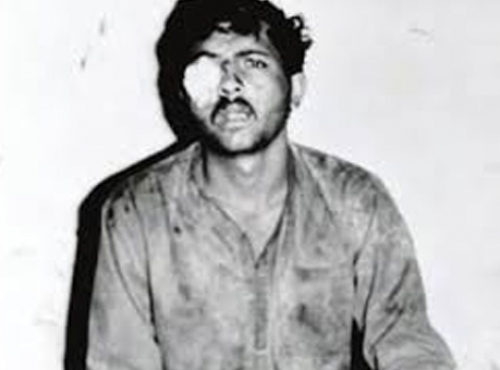
The involvement of Afghan militants from the Azerbaijani side has been confirmed by ample evidence. The Karabakh army, in particular, obtained literature, notebooks, maps, drawings, personal letters in Dari and Pashto – the official languages of Afghanistan – with Pakistani and Afghan addresses, as well as photographs of Afghan militants in Azerbaijan.
In a 1994 report, the Human Rights Watch cites informed sources to claim Afghan mercenaries reportedly numbered from 1,500-2,500: “Afghan mujahideen soldiers, well-trained and acquainted with Soviet weapons, were recruited by the Azerbaijani Government and are involved in the fighting.”
According to an article published by the Christian Science Monitor in 1993, “the decision of the government of [Azerbaijani] President Geidar Aliyev to involve the Afghans is widely believed to reflect their desperation after a string of military defeats at Armenian hands.”
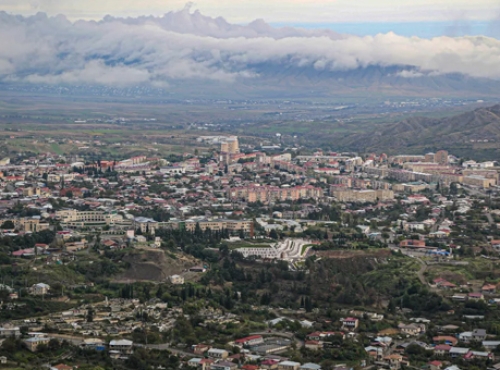
Since the end of the war in 1994, the Armenian side has been in full control of Nagorno-Karabakh (with the exception of a part of the Shahumyan Region), in addition to surrounding areas, most notably the Lachin Corridor, a mountain pass that links Nagorno-Karabakh with mainland Armenia.