







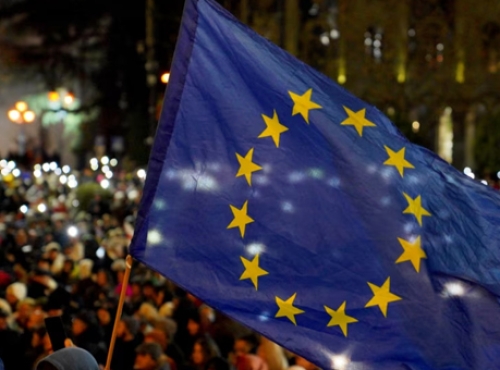


On October 4, following local elections in Georgia, large-scale protests led to violent clashes between demonstrators and police. Protesters stormed the presidential residence, breaching the courtyard and remaining there for some time. Police used water cannons and tear gas to disperse the crowd, BBC reports.
Georgian Prime Minister Irakli Kobakhidze announced a sweeping victory for the ruling Georgian Dream party, later confirmed by the Central Election Commission. Most opposition parties boycotted the elections. The ruling party won in all cities, with Tbilisi mayoral candidate Kakha Kaladze receiving 71.58% of the vote.
Six protesters and 21 police officers were injured. Police arrested all organizing committee members of the rally, including Paata Burchuladze, Murtaz Zodelava, Irakli Nadiradze, Paata Manjgaladze, and Lasha Beridze. They face charges of inciting violent overthrow of the constitutional order and organizing group violence, offenses carrying up to nine years in prison.
The Georgian government also criticized the European Union. Parliament Speaker Shalva Papuashvili said the Georgian people expect an apology from the EU “for supporting protest violence” instead of issuing criticism and disinformation, according to Sputnik Georgia.
EU leaders had called on Georgian authorities to protect citizens' rights to peaceful assembly and expression, urging all sides to avoid violence. The statement, signed by EU High Representative for Foreign Affairs Kaja Kallas and Enlargement Commissioner Marta Kos, condemned misinformation about the EU's role in Georgia and personal attacks on the EU ambassador.
Kobakhidze declared that the “attempt to overthrow the government has failed” and vowed to permanently “neutralize” the United National Movement and other opposition forces to establish a “healthy democratic political system” in Georgia. He accused these groups of foreign influence and seeking to destabilize the country.
Georgia’s State Security Service reported seizing large quantities of firearms, explosives, and detonators allegedly meant for use during the October 4 protest. The arms, reportedly acquired under orders from a Georgian member of a Ukrainian military unit, were discovered in a forest cache near Tbilisi. Criminal proceedings were launched under Article 236 (3) of Georgia’s Criminal Code, which carries a sentence of three to six years in prison.