










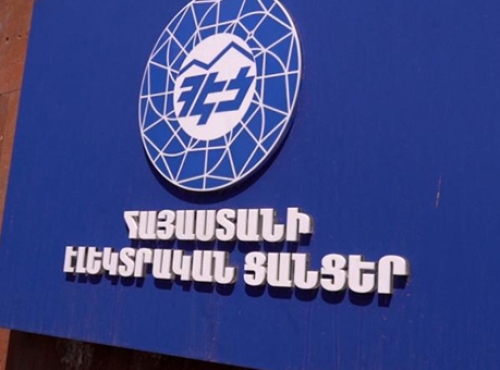


Recent legal amendments allow Armenia's Public Services Regulatory Commission (PSRC) to suspend the license of the Electric Networks of Armenia (ENA), according to legal expert Arsen Tavadyan. He was commenting on a draft decision listed for discussion at the PSRC’s November 13 session regarding revoking ENA’s electricity distribution license, reports Sputnik Armenia.
Tavadyan explained that if the license is suspended, the government may propose that the shareholder sell their shares, assets, or the entire operational complex. During this period, the state-appointed manager would continue overseeing the company. If the owner refuses to sell, the government may invoke Article 67 of the Constitution, which allows expropriation in the name of overriding public interest.
However, Tavadyan stressed that neither nationalization nor expropriation would be easy or swift. Since the commission’s decision is an administrative act, the shareholder could challenge it in court and request a suspension of its enforcement until a final ruling is made.
“If the court suspends enforcement, then the expropriation process would also be halted. Otherwise, the government could proceed under the logic of serving public interest—a legally complicated and slow process,” Tavadyan noted.
In such cases, the government would begin with property valuation, which would precede any acquisition attempt.
Tavadyan questioned the state's motives: “If the Prime Minister says the state may later transfer the assets to another private operator, then this isn’t about increasing state control or economic influence—it’s about redistributing assets. That’s not in line with the concept of public interest.”
He also raised broader concerns: “Why hasn’t this legal approach been applied to other public utilities, like water or gas companies? If the state wants to manage the energy sector, existing regulatory tools already allow it without changing ownership.”
Tavadyan recalled that in July, Tashir Capital filed for arbitration with the Stockholm Chamber of Commerce to block Armenia from applying legal changes and taking steps toward nationalization, including appointing a state manager.
Although the arbitration court accepted the case, the Armenian government has continued its course of action. Tavadyan attributes this to provisions in the New York Convention and Armenia’s Civil Procedure Code, which permit refusal to enforce arbitration awards if they violate public order.
“We are now in a situation where both the Justice Minister and the government's legal representative before international bodies have claimed this is a public order issue. That gives courts grounds to reject or ignore the arbitration ruling. Whether that’s lawful is another question,” Tavadyan added.
On November 13, the PSRC is scheduled to consider the suspension of the electricity distribution license held by the Electric Networks of Armenia CJSC.