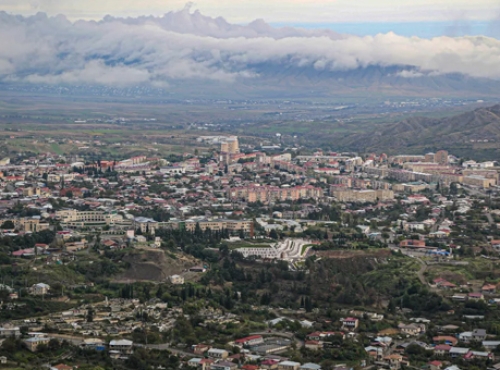









In the 1990s, the aftershocks of the Soviet Union’s collapse kept on coming in the fractious southern Caucasus, with Nagorno Karabakh exploding into conflict, an article published in The Star Canadian news source said.
“In the 21st century, Georgia and Chechnya went back to war. And this week – on the 25th anniversary of a vote that launched two decades of unresolved ethnic strife in Nagorno Karabakh, a leading expert on the region says it could be next,” the article said.
“The risk may seem relatively low,” said Thomas de Waal of the Carnegie Endowment, “but the only thing that is stopping a war is the leaders’ own calculation.”
“Nagorno-Karabakh was shared for centuries by Muslim Azeris and Christian Armenians. But after the First World War, the newly-formed Soviet Union created a largely Armenian autonomous region of Nagorno Karabakh within the republic of Azerbaijan. In February 1988, the local Soviet parliament for Karabakh voted to join Armenia, touching off an inter-ethnic explosion.
Some 30,000 people died in conflicts that left ethnic Armenians as victors. Karabakh was declared an independent — but unrecognized — republic. A Russian-brokered ceasefire ended the fighting in 1994. But more than 1 million ethnic Azeris and Armenians still cannot return home,” the article said.
Meanwhile, said de Waal, Azerbaijan has become an economic oil giant in the region, but with a democratic deficit. President Ilham Aliyev’s regime is using its new-found wealth to equip and expand the army. It is also ratcheting up tensions with anti-Armenian rhetoric.
“In one of the most extreme cases, 75-year-old writer Akram Aylisli was burnt in effigy for a book he wrote to heal relations between ethnic Azerbaijanis and Armenians, and a pro-government party offered a $13,000 bounty for cutting off his ear. “Azerbaijan doesn’t want a compromise,” de Waal said last week at University of Toronto’s Munk Centre. “It spends $4 billion a year on its army.”