










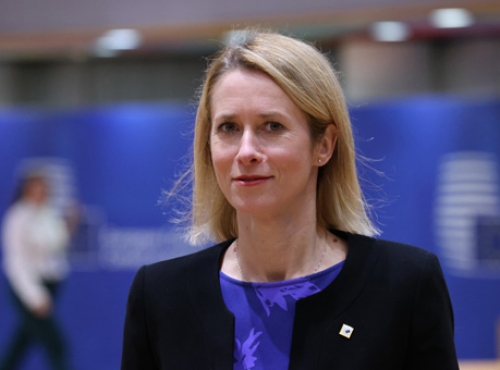


The European Union called the agreements signed on August 8 in Washington, in the presence of U.S. President Donald Trump, an important advance toward ending the decades-long conflict between Armenia and Azerbaijan. In a statement, EU High Representative for Foreign Affairs and Security Policy Kaja Kallas said the EU values the efforts of both sides and the U.S. administration in seizing this moment and achieving progress.
“It will now be important to ensure the timely implementation of agreed steps, in particular the signing and ratification of the peace treaty,” the statement read, according to Armenpress.
Kallas noted that this decisive move follows the conclusion of bilateral talks in March and could lead to full normalization of relations based on mutual recognition of sovereignty, territorial integrity, and inviolability of borders in line with the 1991 Alma-Ata Declaration. She added that the agreed measures are expected to have a positive impact on the region’s peaceful development and help bring divided communities closer to lasting peace and joint prosperity.
The EU reaffirmed its full support for the Armenia–Azerbaijan settlement process and readiness to work with both sides and international partners, providing additional support and advice, including for the practical implementation of next steps.
Council of Europe Secretary General Alain Berset also warmly welcomed the initialing of the peace agreement in Washington, calling it a path to the final resolution of the long-standing conflict between the two countries.
“This development is a historic milestone on the road to lasting peace in the South Caucasus—a region whose stability is vital for the prosperity and security of all its peoples, including that of Georgia,” Berset said. He stressed that the Council of Europe is ready to assist Armenia and Azerbaijan.
Berset noted that he has regularly discussed peace with the leaders of both countries and praised them and their citizens for showing political will, perseverance, and courage in working toward a fair and lasting peace. Overcoming decades of mistrust, territorial disputes, and humanitarian challenges, he said, requires difficult but necessary compromises.
The secretary general urged both countries to continue advancing toward peace, not only by rebuilding trust, connections, and infrastructure, but also by strengthening democracy, human rights, and the rule of law, including by fully implementing the judgments of the European Court of Human Rights.
He concluded that a just and lasting peace will be measured by institutional resilience, the vibrancy of civil liberties, and the well-being of all citizens, and pledged that the Council of Europe will continue its efforts to contribute to such an outcome.
On August 8, during the trilateral meeting at the White House between Prime Minister Nikol Pashinyan, U.S. President Donald Trump, and Azerbaijani President Ilham Aliyev, a joint declaration was signed summarizing the results of the Washington talks. In Washington, Armenian Foreign Minister Ararat Mirzoyan and Azerbaijani Foreign Minister Jeyhun Bayramov, in the presence of the leaders of Armenia, Azerbaijan, and the U.S., also initialed the “Agreement on the Establishment of Peace and Interstate Relations between the Republic of Armenia and the Republic of Azerbaijan.”