









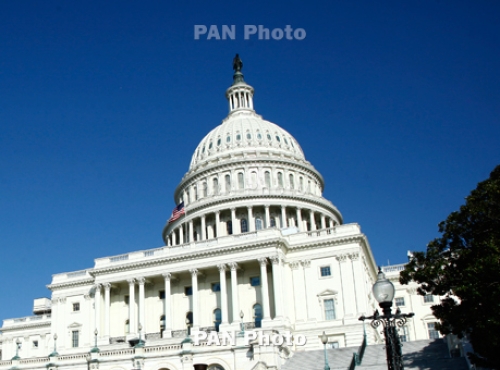


On September 17, a congressional briefing titled Justice for Armenian Captives was held at the U.S. Capitol in Washington, D.C., organized jointly by the Armenian National Committee of America (ANCA) and the Armenian Legal Center for Justice and Human Rights (ALCJHR). The event aimed to inform Congressional staff about the ongoing issue of Armenian captives held in Baku.
The discussion was moderated by ALCJHR Director Ken Khachigian, with presentations from Siranush Sahakyan, president of the International Comparative Law Center and legal representative of Armenian captives at the European Court of Human Rights; Jared Genser, international legal counsel to Ruben Vardanyan and Executive Director of Perseus Strategies; and Armenian-American lawyer Garnik Kerkonian, founding partner of Kerkonian Dajani LLP.
Khachigian emphasized that the hearing was dedicated to 23 Armenians held in Baku, who are subjected to torture and mistreatment.
Sahakyan gave an overview of the captives' condition, expressing concern over Azerbaijan’s recent suspension of the International Committee of the Red Cross (ICRC) operations at Baku’s request. She noted that the ICRC was the only international body with access to the detainees and that since its last visit in June, there has been no reliable information about their status.
Asked about the clause in the Armenia–Azerbaijan preliminary agreement requiring the withdrawal of international legal claims, Sahakyan warned it would eliminate justice and protection for the captives. She stressed that since the release of detainees is not part of the agreement’s terms, Aliyev’s regime would face no political or legal obligation to free them, which could undermine public trust in the peace process.
Jared Genser detailed the legal violations in the investigation and trial of his client Ruben Vardanyan, noting that Vardanyan has gone on hunger strike twice and was tortured during the first. He now faces life imprisonment under over 40 fabricated charges, including planning aggressive war, violating the laws of war, and financing terrorism.
Genser dismissed the charges as absurd. For example, he noted that Vardanyan’s independent Aurora humanitarian initiative, subject to international audits, is being portrayed as a front for terrorism financing.
Genser added that supposed “victims” brought to testify during court hearings admitted they had never seen Vardanyan and only knew of him through the media. No factual evidence had been presented linking him to the alleged crimes. “Any court where the rule of law prevails would dismiss such evidence outright. But of course, this is not the case with Azerbaijan’s military court,” he said.
In response to Khachigian’s question about a more vocal position from the Trump administration, Genser emphasized the importance of raising the issue during the Trump-Pashinyan meeting. “Now that Trump has made a public commitment, it is critical to ensure follow-through. I don’t believe Aliyev wants to release them all, and I’ve warned about that. It’s vital they are all freed.”
Genser acknowledged that there’s still a long road ahead but noted that messaging from the White House and State Department is coordinated and signals a willingness to move forward. “Whether they are ready to apply the necessary pressure for a rapid resolution is another matter—and exactly what we must focus on,” he concluded.
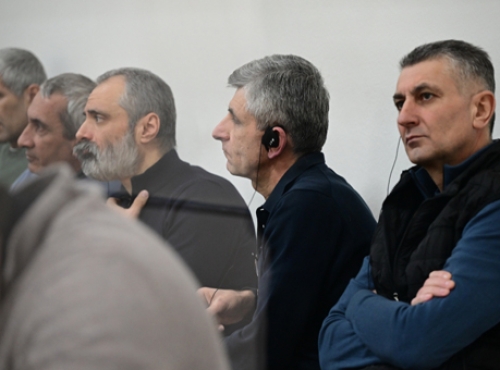
Following the nine-month blockade of Artsakh and the ethnic cleansing of its Armenian population in September 2023, Azerbaijan captured several former leaders, including ex-presidents Arkadi Ghukasyan, Bako Sahakyan, Arayik Harutyunyan, former state minister Ruben Vardanyan, foreign minister Davit Babayan, and others. The fabricated charges they face could result in life imprisonment. Their sham trial began in Baku on January 17.