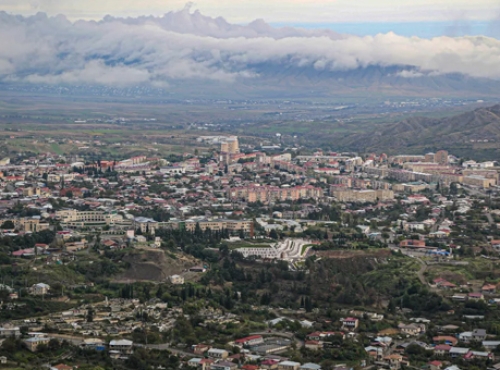










In a joint article published in the respected French daily Le Monde on the second anniversary of the November 17, 2023 order by the International Court of Justice (ICJ), 23 parliamentarians from various countries called for respect for international law and the realization of the right of return for Armenians forcibly displaced from Nagorno-Karabakh. This right, they note, has yet to be fulfilled despite clear international court rulings.
They argue that “the issue of the Armenians of Nagorno-Karabakh is not one of borders or ethnicity, but of the universality of human rights,” according to Aravot.am . They recalled that on November 17, 2023, the ICJ ordered Azerbaijan to immediately ensure the safe, dignified, and unimpeded return of displaced Armenians from Nagorno-Karabakh, along with the protection of their property and preservation of their cultural heritage.
The parliamentarians stressed that this ruling, based on the principles of international law, overrides any political considerations or bilateral agreements. Yet, two years on, it remains unimplemented. No efforts have been made to allow refugees to return to their homes, protect their rights, or document the condition of their abandoned towns and villages.
They warn that Armenian property and cultural heritage in Nagorno-Karabakh continues to be destroyed, altered, or appropriated with the clear intent of erasing their presence and history. The lack of action by international organizations and states is alarming, especially at a time when other peoples around the world are also endangered. “Should we silently condone a reality that is legally classified as a crime against humanity and ethnic cleansing?” the article asks.
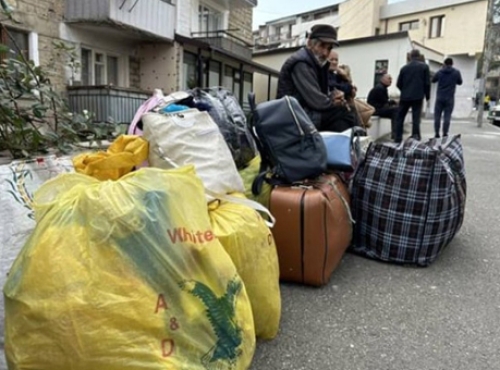
The authors recalled the Azerbaijani military assault on September 19, 2023, and the preceding blockade, which together led to the mass displacement of nearly 120,000 Armenians from Nagorno-Karabakh. They emphasize that there has been no international political response proportionate to the gravity of this crime.
They insist that the current balance of power cannot override the enforcement of international law: the right of return for Karabakh Armenians surpasses any geopolitical calculation and is a universal responsibility anchored in international conventions. The authors invoke Article 12 of the UN Covenant on Civil and Political Rights, which guarantees each person’s inalienable right to return to their country.
“This right is not based on citizenship, but on deep and lasting ties to a land, its culture, and memory. It does not belong to states but to individuals. No authority, by inaction or renunciation, can strip individuals of that right,” the article states.
They also criticize the Armenian-Azerbaijani peace agreement signed in Washington on August 8, 2025, which they say contains no mechanism for the return of displaced persons, the release of prisoners, or the protection of Armenian cultural heritage. Although presented as a historic document, the agreement effectively validates the consequences of ethnic cleansing while strengthening the strategic position of Baku and its allies.
The article reiterates that the issue is not about borders or ethnic identity, but about the universality of human rights and the credibility of the very states that claim to uphold them. Denying the rights of displaced persons simply because they are of Armenian origin, or leaving their protection solely to the Republic of Armenia, is to reject the universality of human rights. These rights are not dependent on political alignment and are binding on all states, regardless of alliances.
The authors note that initiatives are underway in several countries, including in the European Parliament, to restore the rights of displaced Armenians from Nagorno-Karabakh and safeguard their cultural legacy. They urge the international community not to turn away, but to act on conscience and justice.
“Justice begins where the conscience refuses to look away. Peace cannot be born from forgetting,” the article concludes.
The article was signed by 23 parliamentarians from the European Parliament, France, Switzerland, Denmark, Cyprus, Belgium, Argentina, and Uruguay.